Africa's Developer Decade | The Numbers Behind the World's Fastest-Growing Talent Pool
Summary: Samuel Kinyua discusses the rapid growth of the developer community in Africa, highlighting the continent's position as the fastest-growing region for developers globally. The discussion notes significant growth in Nigeria, South Africa, Kenya, and Egypt, among others, with projections suggesting a doubling of developers in the coming years. Despite challenges such as a gender disparity in the workforce, the potential for economic impact is substantial. The conversation emphasizes the importance of ownership infrastructure to prevent Africa from becoming merely a talent exporter, advocating for platforms that enable local developers to monetize solutions within the continent. The message is clear: Africa's developer community is thriving and will play a crucial role in the global digital economy.
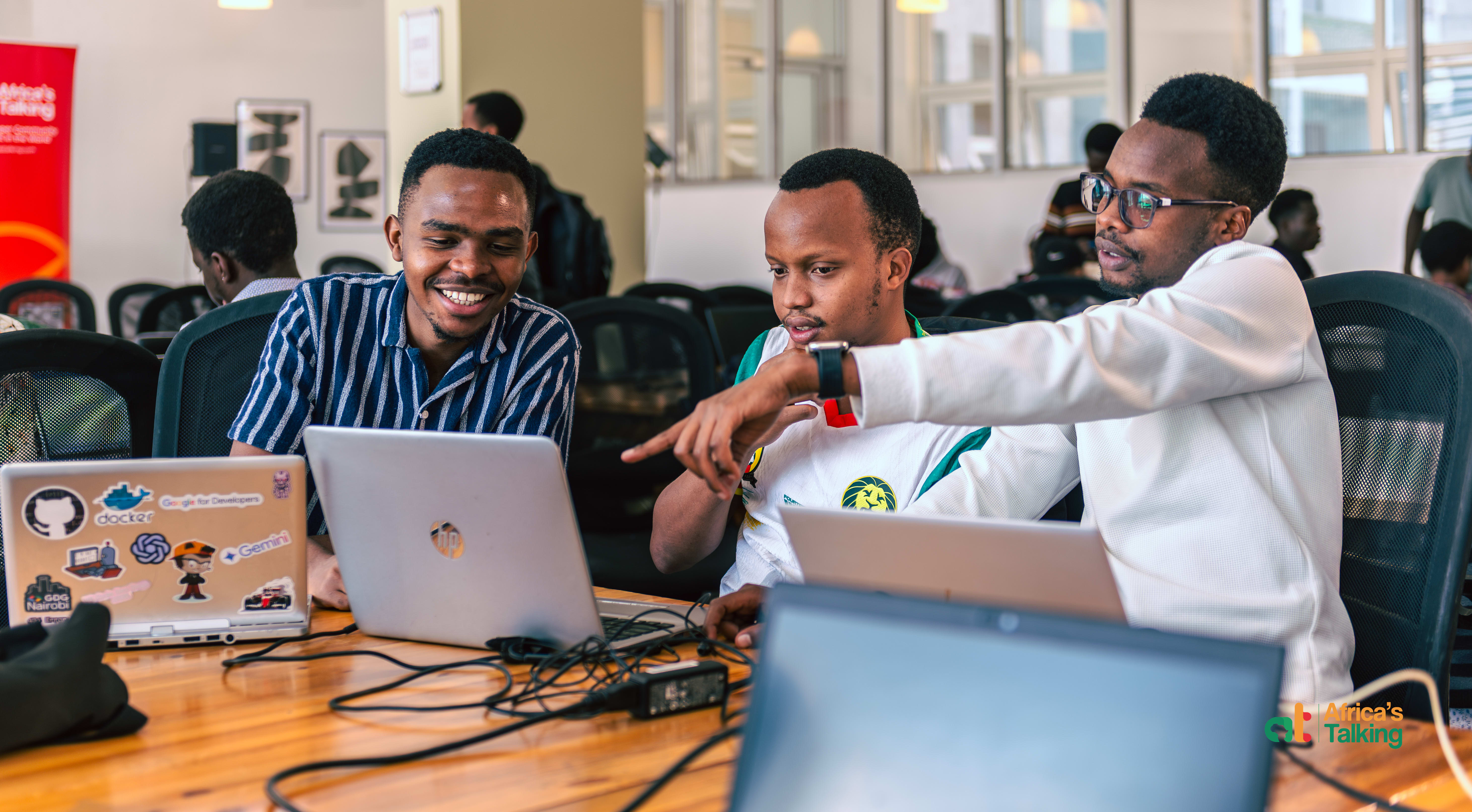
by @Michael Kimathi
Every few months someone asks me a version of the same question: "Is the African developer story real, or is it conference-stage optimism?" I lead a community of more than 300,000 developers across this continent, and I see the growth at every meetup, hackathon, and summit we host. But you do not have to take my word for it. The numbers are public, and they are worth reading closely.
The Headline: Fastest Growth on Earth
Start with the continental picture. In 2021, Google's Africa Developer Ecosystem report counted roughly 716,000 professional developers across the continent (Google, 2021). In 2026, BCG's "Develop the Developers" report, which uses GitHub-based data and a broader definition that includes students and self-taught builders, put Africa at about 4.7 million developers, growing at an average of 21% per year between 2019 and 2024 (Boston Consulting Group, 2026).
Hold onto that 21%. It is the highest growth rate of any region in the world, ahead of Latin America (19.8%), Asia (16.6%), Europe (11.3%), North America (9.2%), and Oceania (2.2%). Yes, Africa's absolute base is still small next to Asia's 73.9 million or Europe's 27.5 million. But at 21% a year, a small base does not stay small for long.
GitHub's own Octoverse reports confirm the direction. The 2025 edition, covering a year in which more than 36 million new developers joined the platform globally, singled out Egypt, Nigeria, Kenya, and Morocco as countries projected to add millions of developers in the coming years, and noted that one in three new developers now comes from a country that was not in the global top ten in 2020 (GitHub, 2025). Software talent is spreading beyond its old capitals, and Africa is one of the places it is moving to.
Country by Country

Nigeria is the continental engine. In 2021, Google counted 89,000 professional developers there (Google, 2021). By GitHub's 2023 Octoverse, Nigeria posted 45% year-over-year developer growth, the largest increase worldwide that year (GitHub, 2023). By late 2024, more than 1.1 million developers were building on GitHub in Nigeria (GitHub, 2024b), and reporting on GitHub's Q4 2025 data put the figure above 1.6 million, the largest developer community in Africa. Lagos is no longer an emerging hub; it is a continental capital of software.
South Africa holds the deepest professional base, with 121,000 professional developers in 2021, the continent's largest (Google, 2021), and over 660,000 developers on GitHub by 2024, up 23% year over year. It also leads in advanced work: contributions to generative AI projects from South Africa grew more than 44% in a single year (GitHub, 2024b).
Kenya is the pace-setter. From roughly 55,000 professional developers in 2021 (Google, 2021) to more than 393,000 GitHub developers by 2024, a 33% annual jump and among the fastest anywhere (GitHub, 2024b). Kenya put programming into public school curricula, and you can feel Nairobi's density of fintech companies and developer schools at every meetup, workshop and hackthon we host.
Egypt combines scale with intensity: 89,000 professional developers in 2021 (Google, 2021), one of the continent's highest developer-per-capita ratios alongside Morocco, and a concentration of Africa's AI, machine learning, and data science specialists in North Africa (Boston Consulting Group, 2026). GitHub projects both countries among the fastest-adding developer populations globally.
The rising tier matters just as much: Ghana and Tunisia (about 30,000 professional developers each in 2021), Tanzania (about 25,000), and Uganda (about 20,000) (Google, 2021), with Rwanda, Senegal, Ethiopia, and Cote d'Ivoire building deliberate national pipelines. These are the markets where a single university program or a single anchor employer still visibly moves the national number, which means they are also the markets where ecosystem investment has the highest marginal return.
The Next Three to Ten Years
Let me be honest about projections: these are extrapolations, not prophecy. If the continent merely sustains something near its growth rate from 2019 to 2024, Africa's 4.7 million developers become roughly 9 to 10 million by around 2028 or 2029, and could plausibly pass 20 to 25 million in the early-to-mid 2030s. Even under a conservative scenario in which growth cools to Asia's rate of about 16%, Africa roughly doubles every five years.
Three things make me believe the high end. First, demographics: 80% of Africa's professional developers are under 35, and the continent will add hundreds of millions of working-age people by 2050, the youngest population on Earth learning to code on the cheapest devices ever made. Second, precedent: GitHub expects India to become its largest developer population by 2028, overtaking the United States (GitHub, 2024a), proof that developer numbers follow population and ambition, not legacy infrastructure. Africa is the next chapter of that same story. Third, AI: free and low-cost AI coding tools are collapsing the cost of becoming productive, which benefits late-starting ecosystems most.
One caveat I refuse to bury: women still make up only about 15% of Africa's developer workforce (Google, 2021). If we close even half of that gap, every projection above is an underestimate. This is why our Women in Technology track runs a full parallel calendar, not a side event.
What The Talent Curve Means For Money
Google and the IFC projected Africa's internet economy at $180 billion by 2025 and $712 billion by 2050. Their research also found that a 10% increase in mobile internet penetration lifts African GDP per capita by about 2.5%, a stronger multiplier than the global average (Google and International Finance Corporation, 2020). Software is not a sector here; it is a development strategy. The capital side is recovering as well: after two years of the global funding winter, 178 African startups raised $1.64 billion in 2025, up 46.2% on 2024 (Disrupt Africa, 2026).
But there is a catch in the current model. Google found that 38% of African developers already work for at least one company outside the continent, and salaries grew 11% in 2021 alone (Google, 2021). Remote work raised incomes, which I celebrate. The risk is that Africa becomes a talent exporter the way it was once a raw-materials exporter: shipping the input, importing the finished product, and capturing the smallest slice of the value.
The answer is ownership infrastructure: platforms where African developers do not just work in the global software economy but sell into it and into their own markets. That is also the continent's stated policy: the African Union's Digital Transformation Strategy sets a Digital Single Market target for 2030 and frames the goal as Africa becoming a producer, not only a consumer, in the global digital economy (African Union, 2020). This is precisely why we built the Africa's Talking Marketplace, a place where a developer in any of these countries can package a solution once and monetize it across the continent, on the channels (SMS, USSD, and Voice) that actually reach African customers. The 4.7 million developers are the supply. The $180-billion-and-growing internet economy is the demand. Marketplaces are the rail between them.
The Bottom Line
Fastest growth rate in the world. Four countries projected to add millions of developers each. A youth bulge that guarantees the pipeline for decades. An internet economy compounding toward $712 billion. If you are waiting for more evidence before taking African developer talent seriously, you will simply pay more for the same talent later.
The builders are here. The next decade decides who owns what they build.
Are you a developer ready to productize your solution, or a business looking to scale workflows faster? Check out our marketplace here: https://bit.ly/4A8Gg2i

 Admin
